
Timber that already lived once.
Where our wood comes from, the ironwood we're developing, how we burn and oil it, and how every piece is built.
Last updated 2026-10-16
17,000 islands, built in wood.
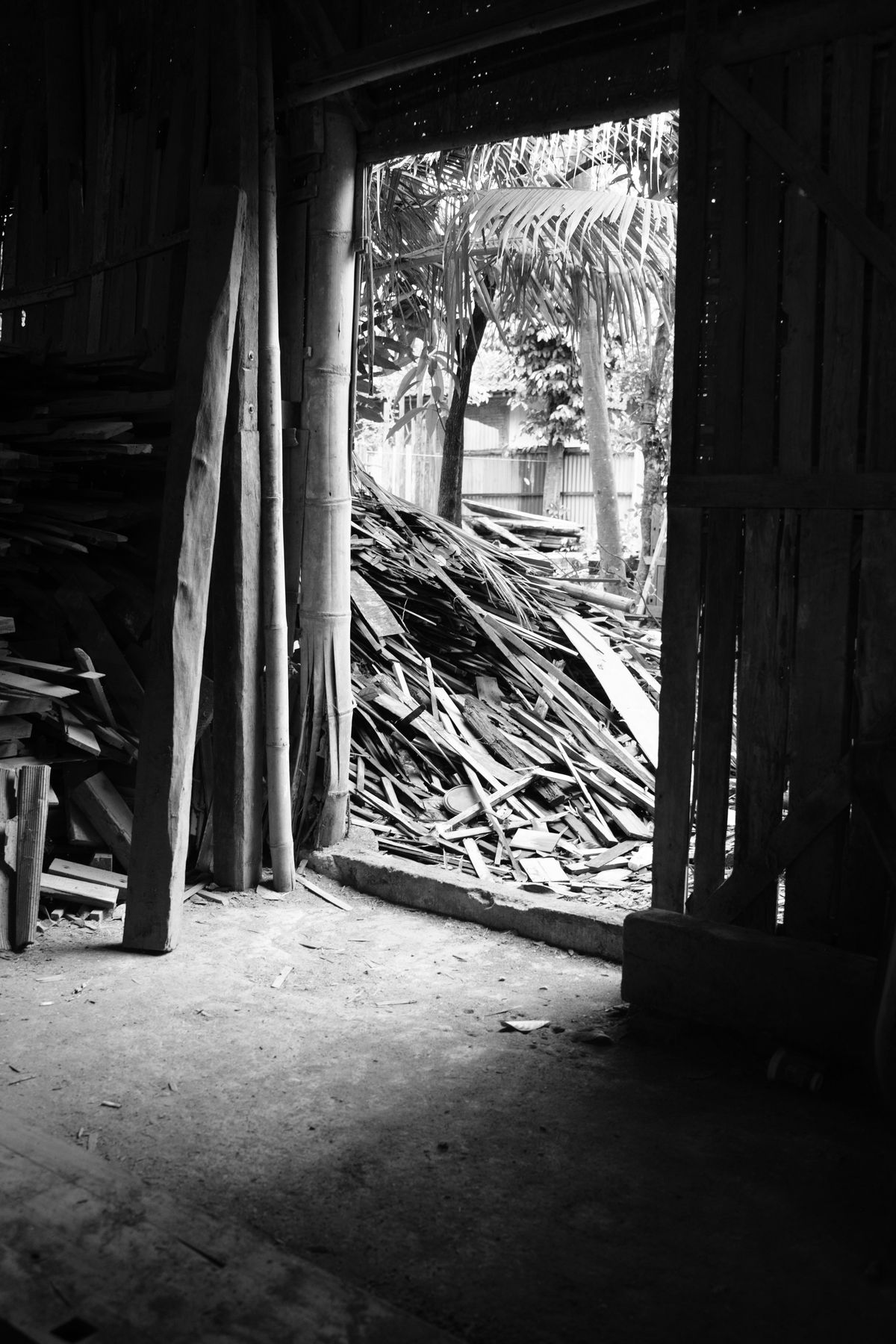
Indonesia has more than 17,000 islands, and for centuries much of it was built in wood. On Java, families lived in joglos: big teak houses held up by four mighty pillars and put together without a single nail.
Today many of them are making way for concrete. The teak inside is often older than our grandparents. Throw it away? Not on our watch. We'd rather give it another life.
Our teak (Tectona grandis) is repurposed: timber that has already lived a life, often in old joglo houses, and also in bridges, boats and other structures. We are also building a way to trace each piece's own story: the Passport.
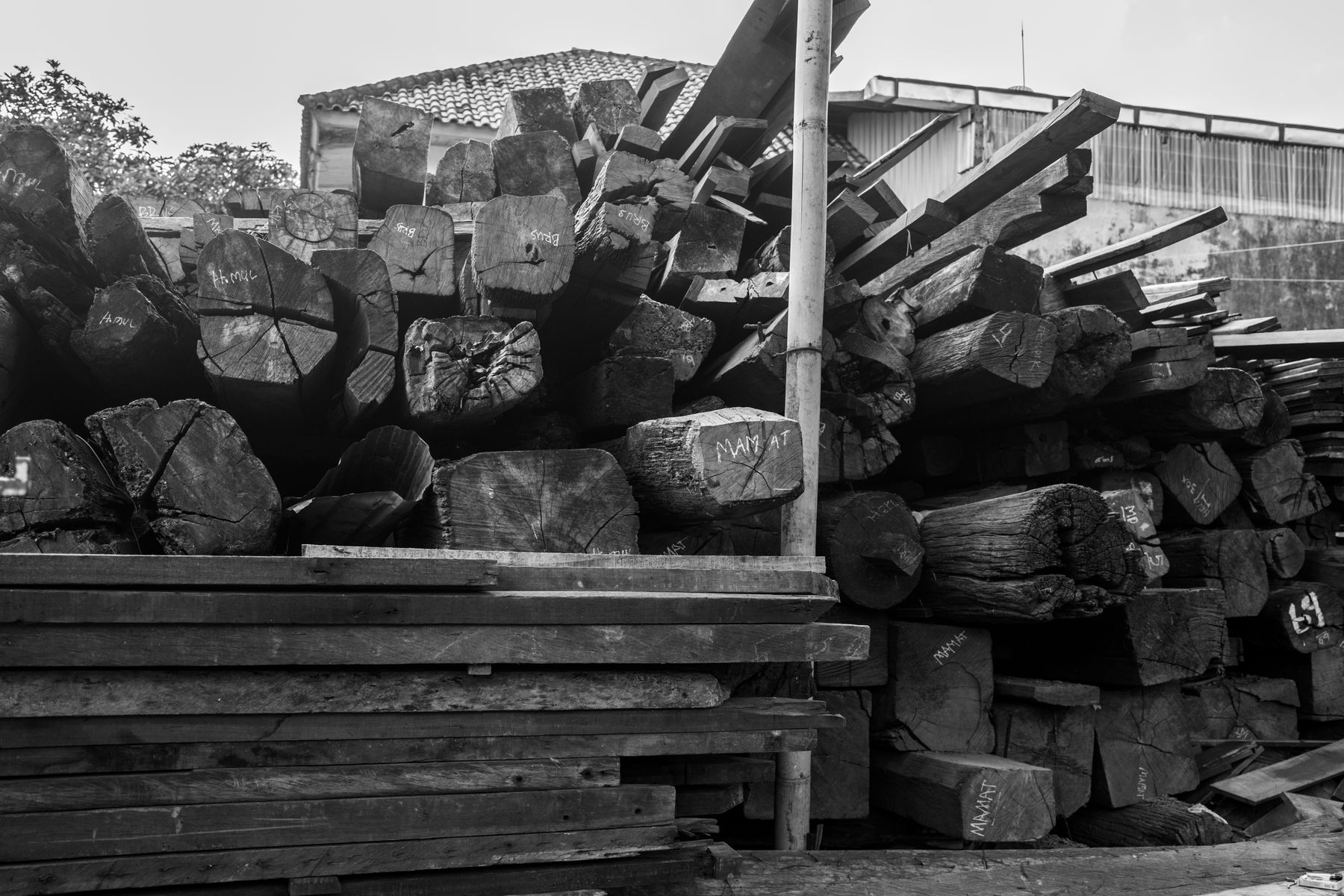
Old posts and beams, marked and sorted before they are cut.
Meet ulin, Borneo's ironwood.
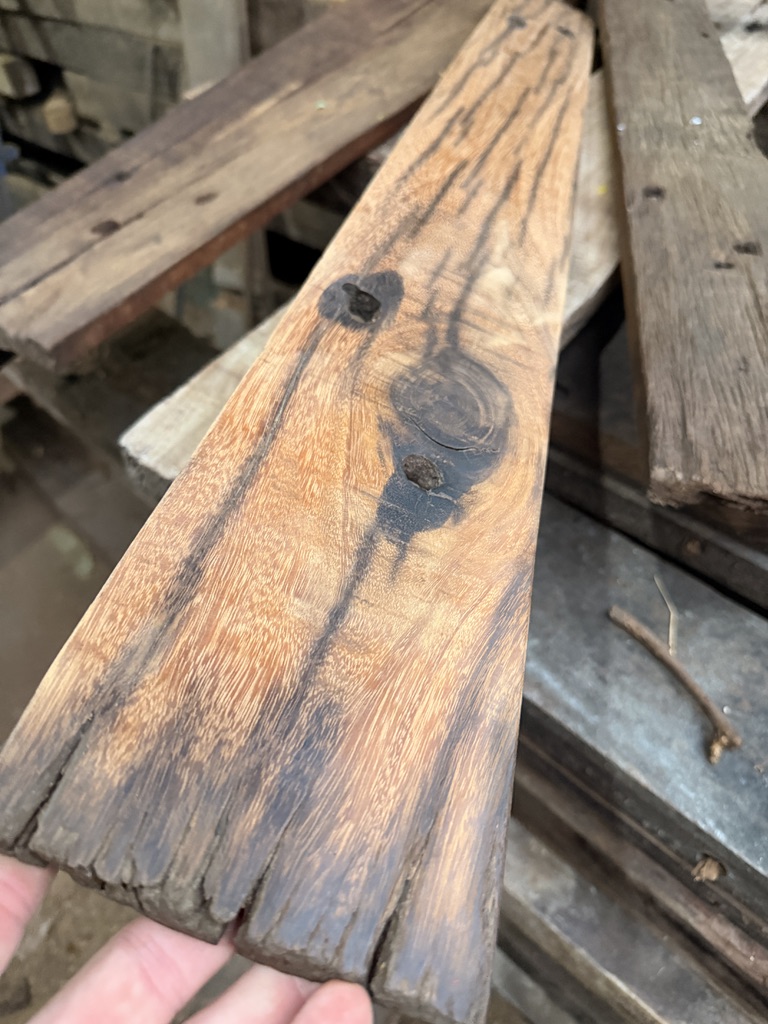
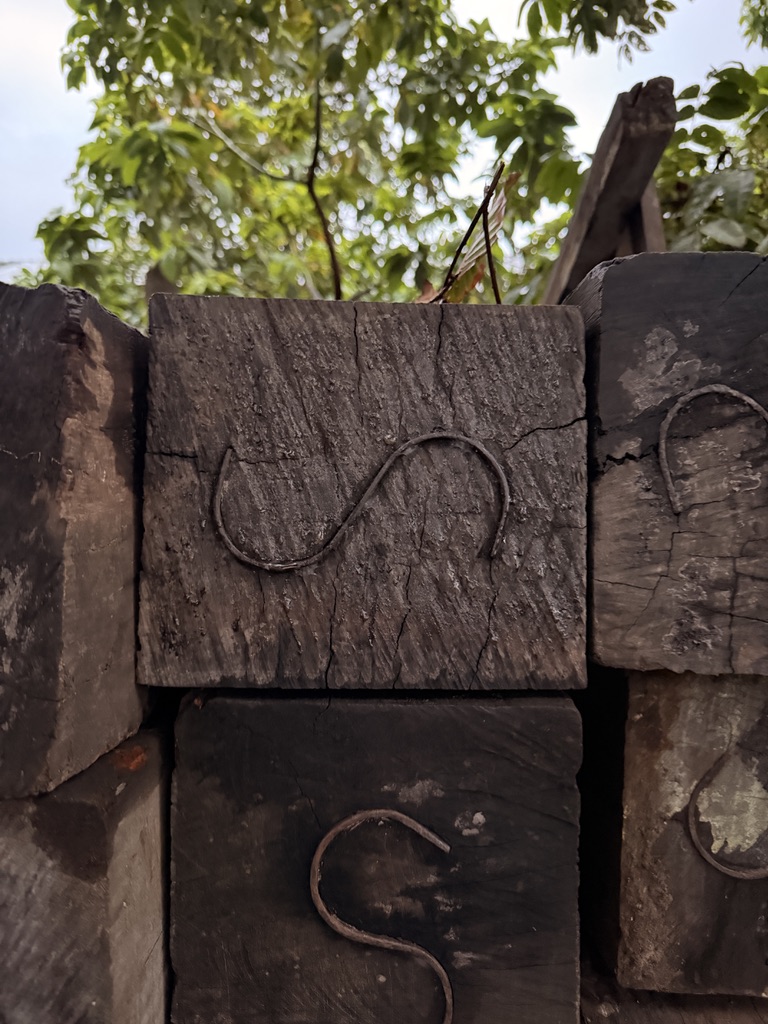
Ulin (Eusideroxylon zwageri) is so dense it sinks in water, so tough that termites give up, and so slow-growing that a tree can live for more than a thousand years. For generations it carried fishing boats, held up bridges and kept river villages above the water.
A wood like that should never be cut new. So when an old boat or bridge retires, we give its ironwood a second career. Our first ironwood samples have just left the workshop.
Why can't you just buy new ulin?
Because a tree that takes centuries to grow was cut much faster than it could grow back. Indonesia stepped in: new ulin can no longer be exported, and the species is protected. Old ulin is another story. When a bridge, a house or a dock has done its job, its wood can start again, traced and documented. That's the only ulin we'll ever use.
Fire, borrowed from Japan.
In Japan, carpenters have protected cedar by setting it on fire for centuries. Really. It's called yakisugi, and a charred surface helps wood stand up to weather and bugs.
We borrowed the idea and tried it on something harder: repurposed teak. We burn the surface, then rub in natural oil. The idea is to help the wood handle the tropical sun.
An old Japanese technique, moved to a new wood and a new climate. Just the wood, a little braver.
Into the wood, not on top of it.
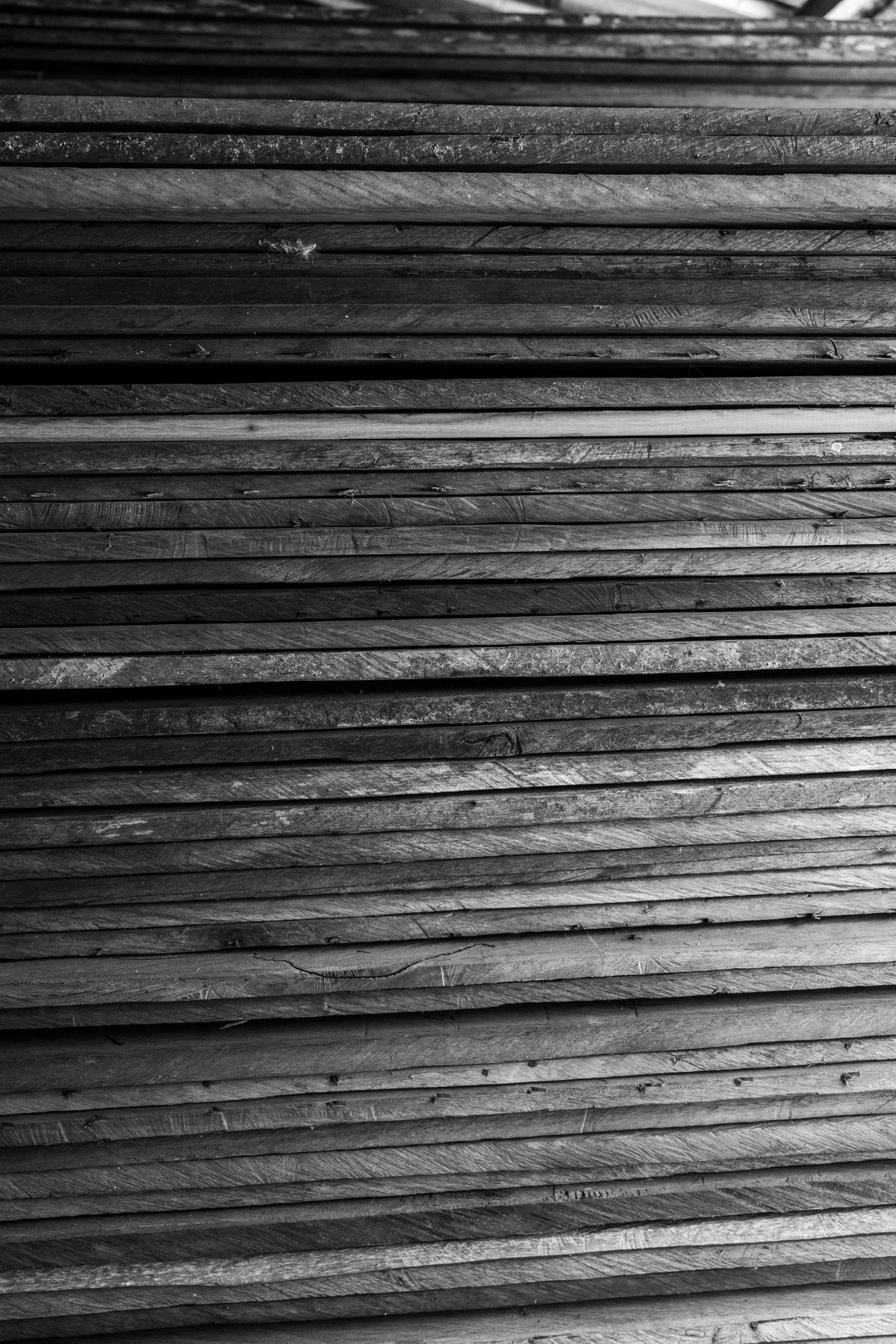
Many outdoor finishes are coatings: a layer that sits on top of the wood. Over time they weather, flake off and end up in the soil and the sea.
We finish with natural oil instead. It soaks into the wood rather than forming a skin, and when a piece needs care, you oil it again.
Reclaimed wood also carries marks from its first life. They stay visible, wherever they don't weaken the piece. Character is welcome. A weaker chair is not.
Made in Indonesia.
Every piece is made by hand in Indonesia by makers we work with directly, in small batches.
Producing close to the material keeps the supply chain short and visible.
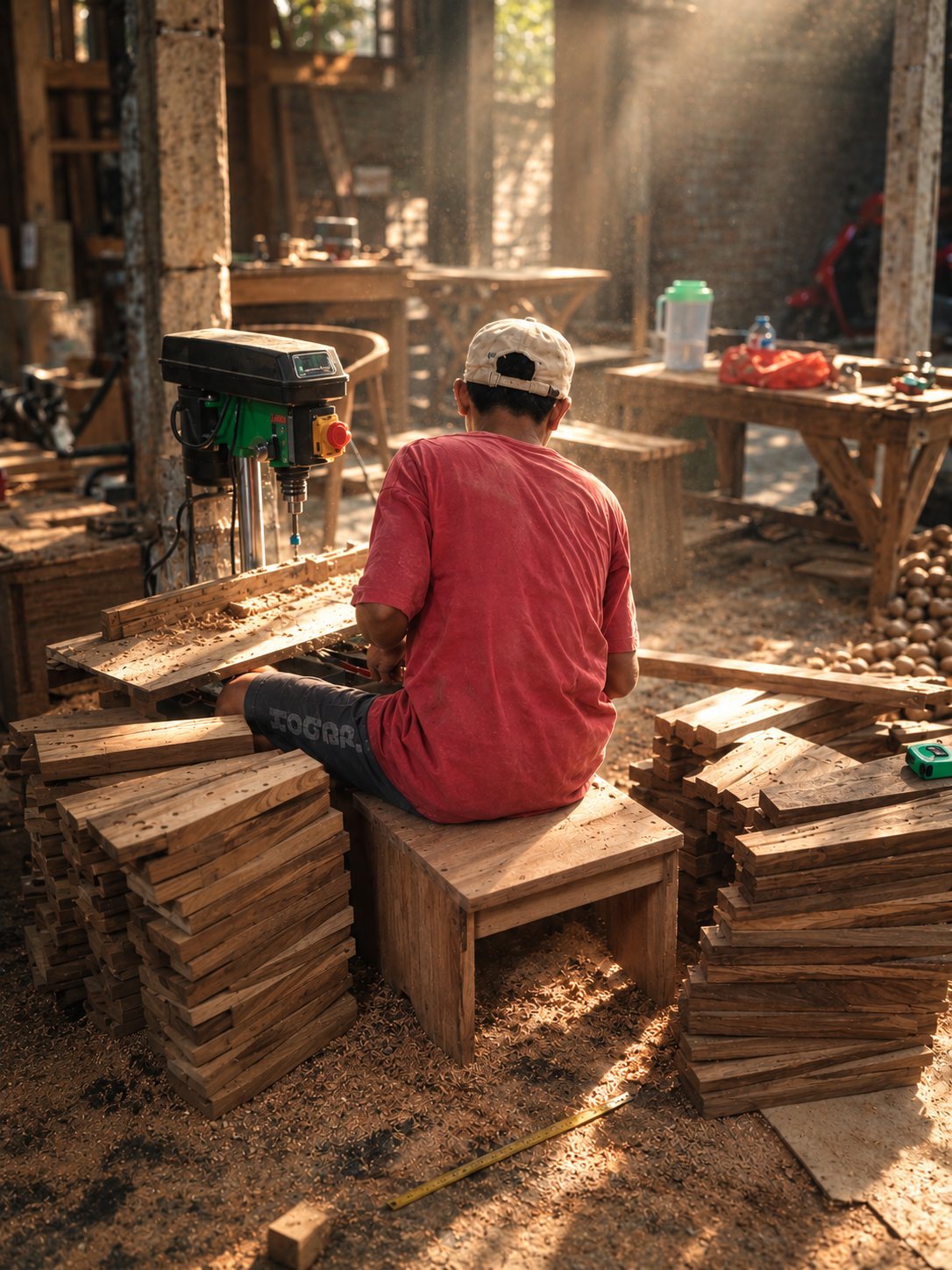
Stacks of repurposed teak, drilled one board at a time.
Bolts built to outlive the chair.
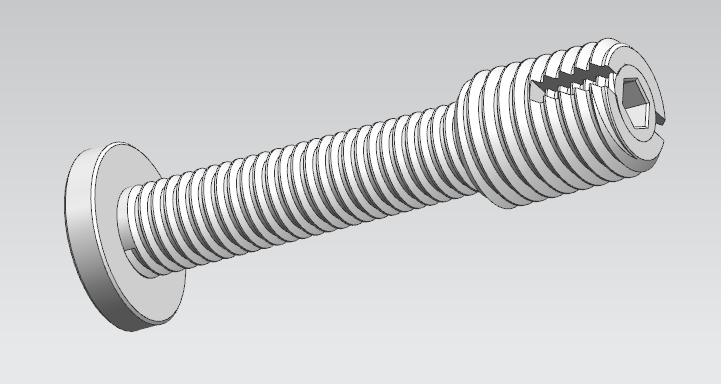
Hardware is usually the last thing anyone thinks about. It is often the cheapest part of a piece of furniture, and the first to fail: screws rust, threads strip, and a good chair is thrown out because of a part that cost almost nothing.
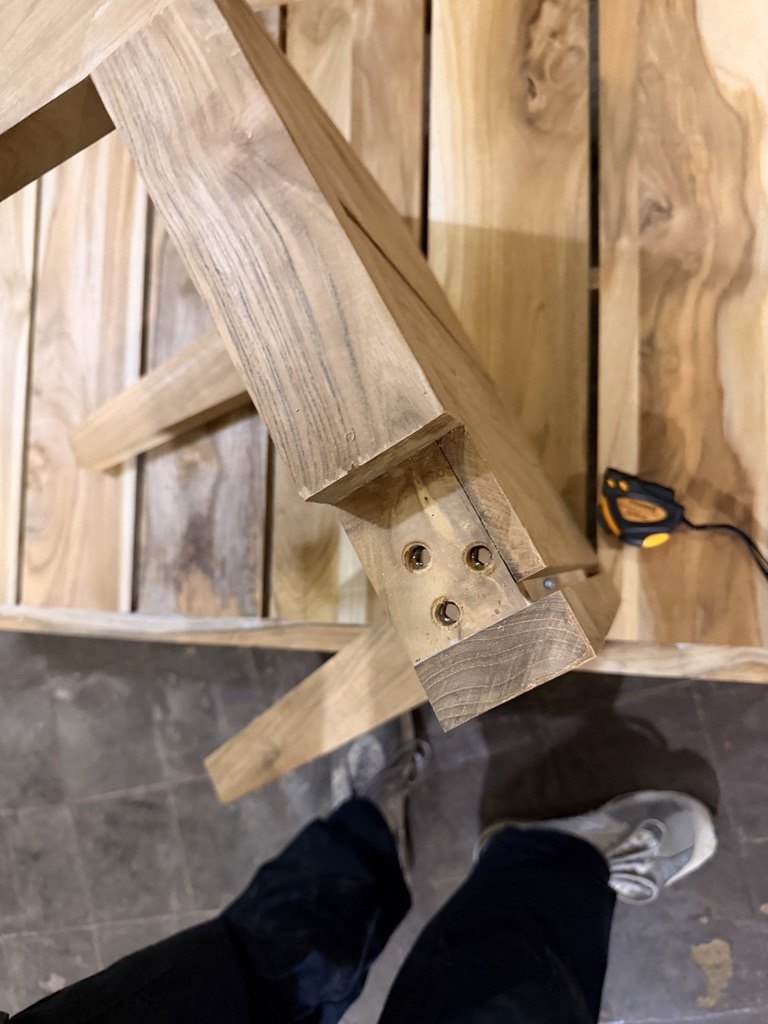
We turned that around. Every SATU joint is held by engineered stainless steel (SUS) bolts that screw into threaded inserts set into the wood. The bolt never cuts into the wood itself, so a joint can be opened and closed again and again without wearing out.
The three-bolt clusters you see on every piece aren't decoration. They hold everything together, and they're designed to last longer than the furniture around them.
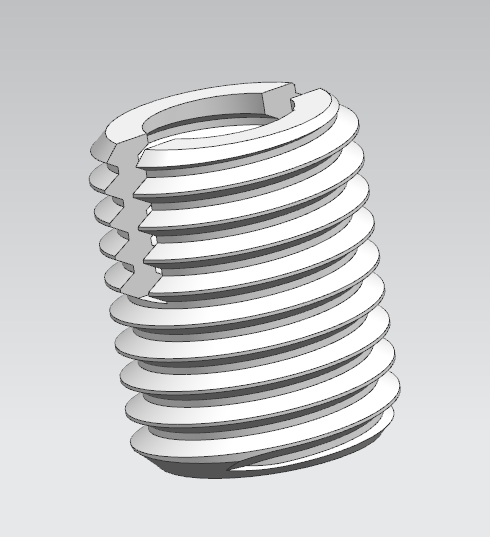
Three dots. One circle.

Look closely at any SATU joint and you'll find three bolts. They hold the piece together, and they also carry the idea behind the name. Each bolt stands for a life the piece can have, and together they turn in a circle:
Material
The wood already lived once, before it reached our workshop.
Owner
The piece can move on to someone new and keep working.
Place
Undo the bolts and it can be rebuilt somewhere else.
Round and round, never ending. That's another life.
Flat, bolted, and back again.
Every piece travels flat and is bolted together on site.
The same bolts let a piece come apart again without damage: to move it, to store it, or to change a single worn part while the rest carries on.
Prices are ex works, Indonesia.
Stop shipping air.
An assembled chair is mostly empty space: between the legs, under the seat, behind the backrest. Ship it like that and you pay to move air across the ocean.
Flat-packed, a 40 ft high-cube container holds around 1,300 of our chairs, against roughly 350 assembled. Almost four times as many chairs per trip, so fewer containers, less fuel and a lower cost for every chair.
Our estimates. The final figures depend on packaging and loading.
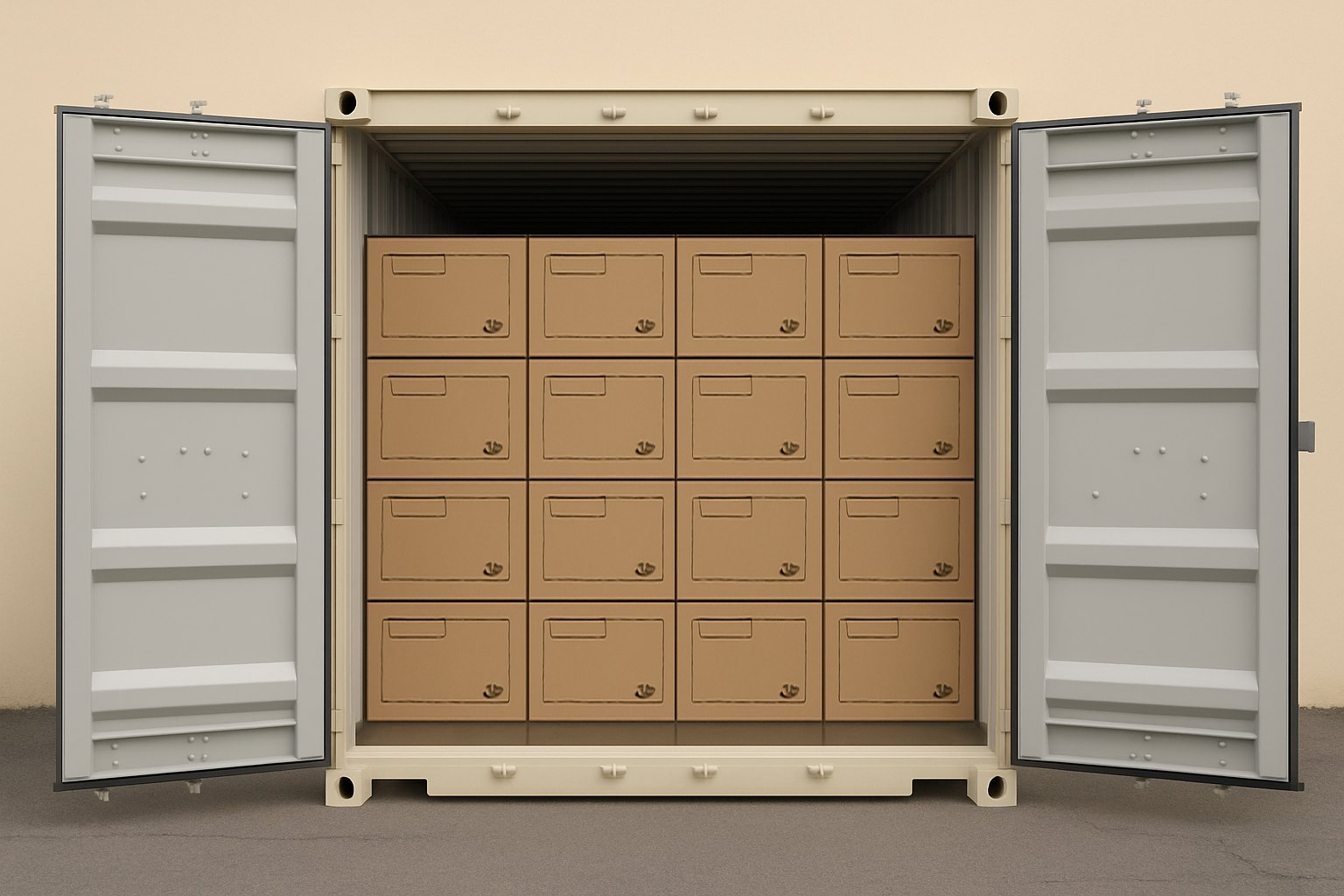
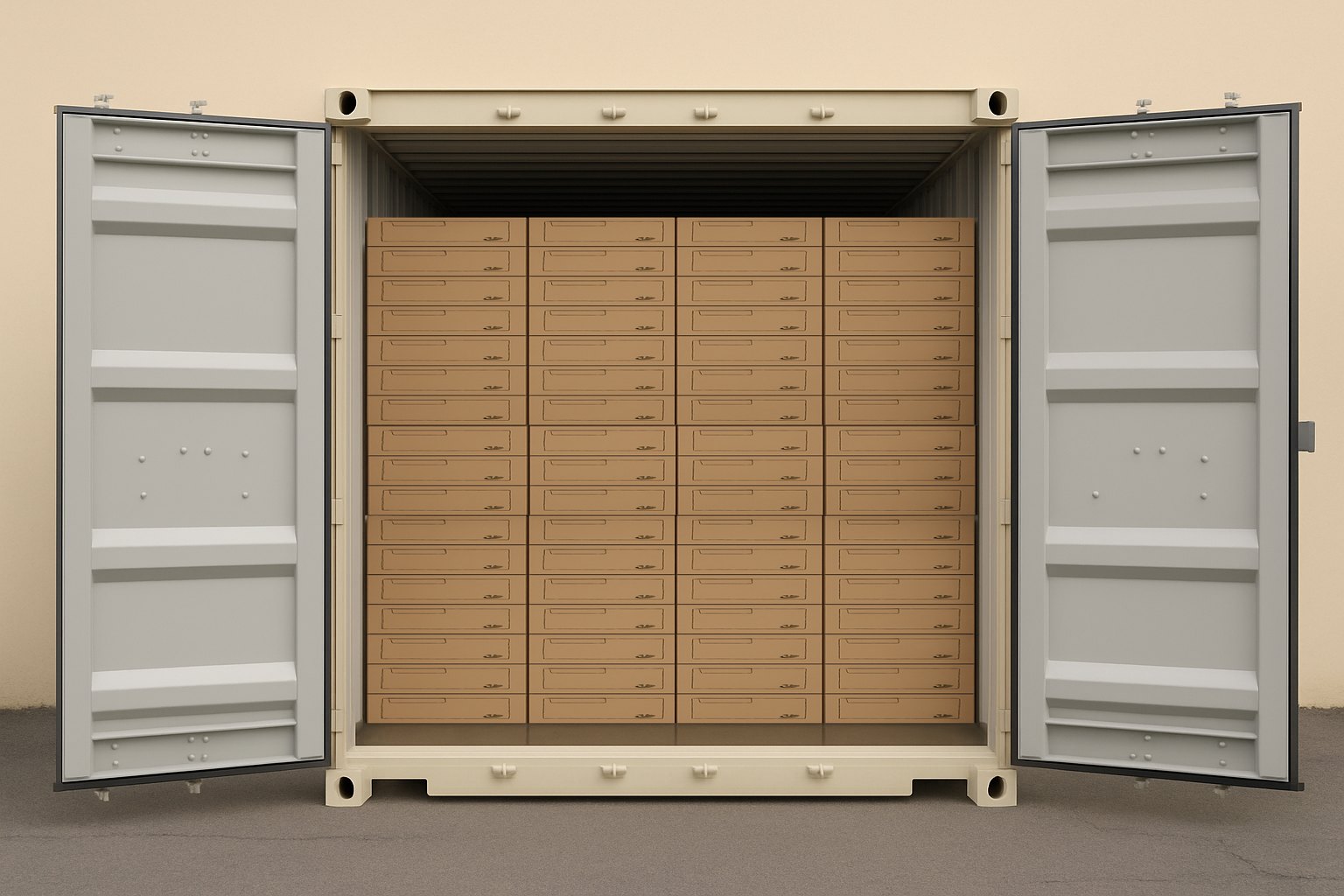
Drag the slider to compare. Illustration.